Witties Trash Picker
Mobile app
An end-to-end experience for communities in Ghana to request and schedule recurring pickups at households and organizations.
Problem
Witties Trash Picker is designed for Witties Ghana. They are an indigenous company whose business revolves around Energy, Environment, and Hygiene. It was established to address sanitation and hygiene challenges in society, and continues to deliver reliable products and services aimed at creating clean, safe, and healthy environments across domestic and commercial facilities.
The challenge was to design a digital platform that would enable homes, schools, and institutions to schedule and request waste pickups.
Insight
In Ghana, waste disposal is not managed by the government but through individual means. Nearly 55% of Ghanaian population dispose through communal containers, 26.7% by burning and 18.6% through backyard burial. This means that people burn waste around their compounds and companies contact cleaners to dispose of their waste.
While urban areas rely on private collection, significant portions are disposed of in landfills, drains and open dumps. In cities like Accra, roughly, 75% of waste is collected by private contractors, while 62% is sent to landfills.
Many residents rely on communal dump sites, burning or dumping where it is convenient.
Through some interviews, I discovered that people needed a solution they could trust to repeatedly take care of their waste, something that works instantly, can be customized, and functions even when they're not around.
Further research revealed that existing waste companies like Zoomlion Ghana Limited handle municipal collection, haulage and landfill decommissioning. They focus on cleaning public environments and neighborhoods, but there was no solution specifically designed for homes, institutions, and schools. This gap became the foundation of the Witties Trash Picker app.
One key insight came from a participant who said, “I may want something but I don’t know how useful that is to me.” This made me reconsider what to include in the platform and how to prioritize features based on actual user needs rather than just stated wants.
This approach helped me balance user needs with business constraints.
Designing the Platform
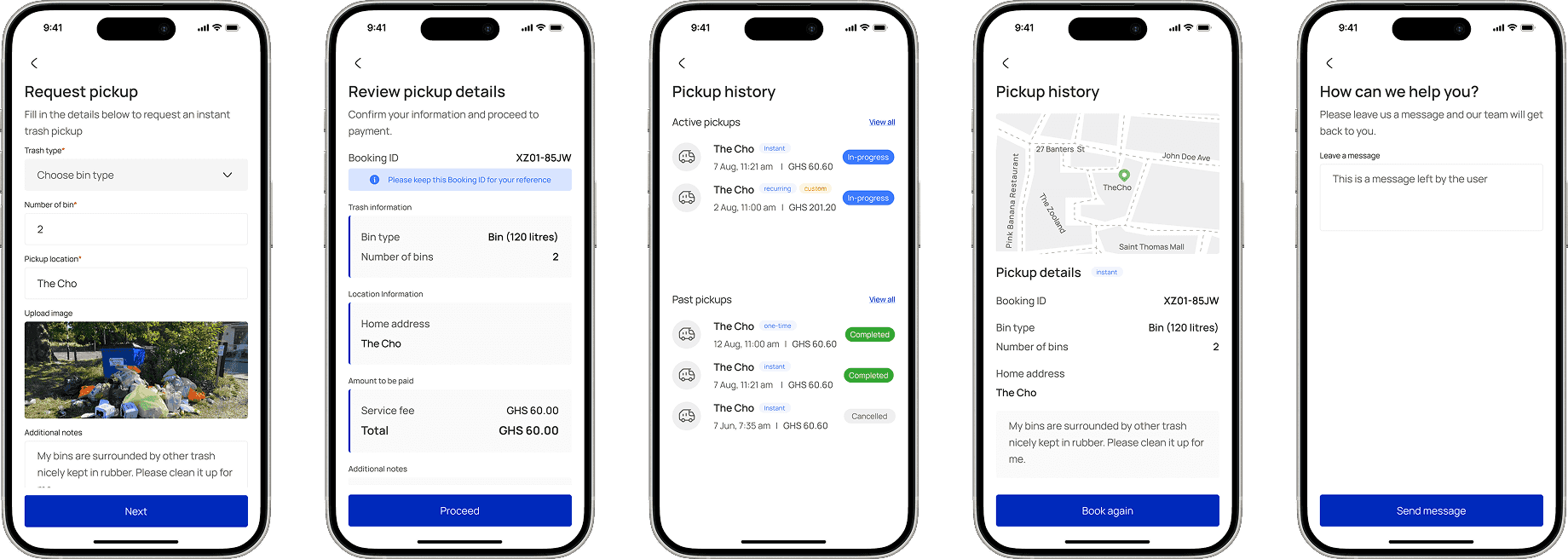
From the findings, key features that were identified were requesting pickups, scheduling recurring pickups, managing subscriptions, viewing history, and contacting support.
I created interactive prototypes and demoed it with the Witties Ghana team, iterating based on their feedback and business requirements.
The biggest challenge I faced was the learning curve. As my first client project, I was new to the UX industry and had to learn how to think from different perspectives, align business needs with user needs, and solve problems strategically.
This led to constant reiterations and a longer timeline and not every thing was done into detail, but it taught me how to approach design challenges systematically.
Throughout the project, I communicated consistently with the Witties team, presented my work regularly on a weekly basis, and actively contributed to the project’s success by sharing ideas and possible solutions. I learned how to receive feedback constructively and translate it into design improvements.
I tested the interactive prototypes with the team and some potential users to validate design decisions and ensure the flows worked as intended before finalizing the designs. Eventually we arrived at this:
The Interface
Home
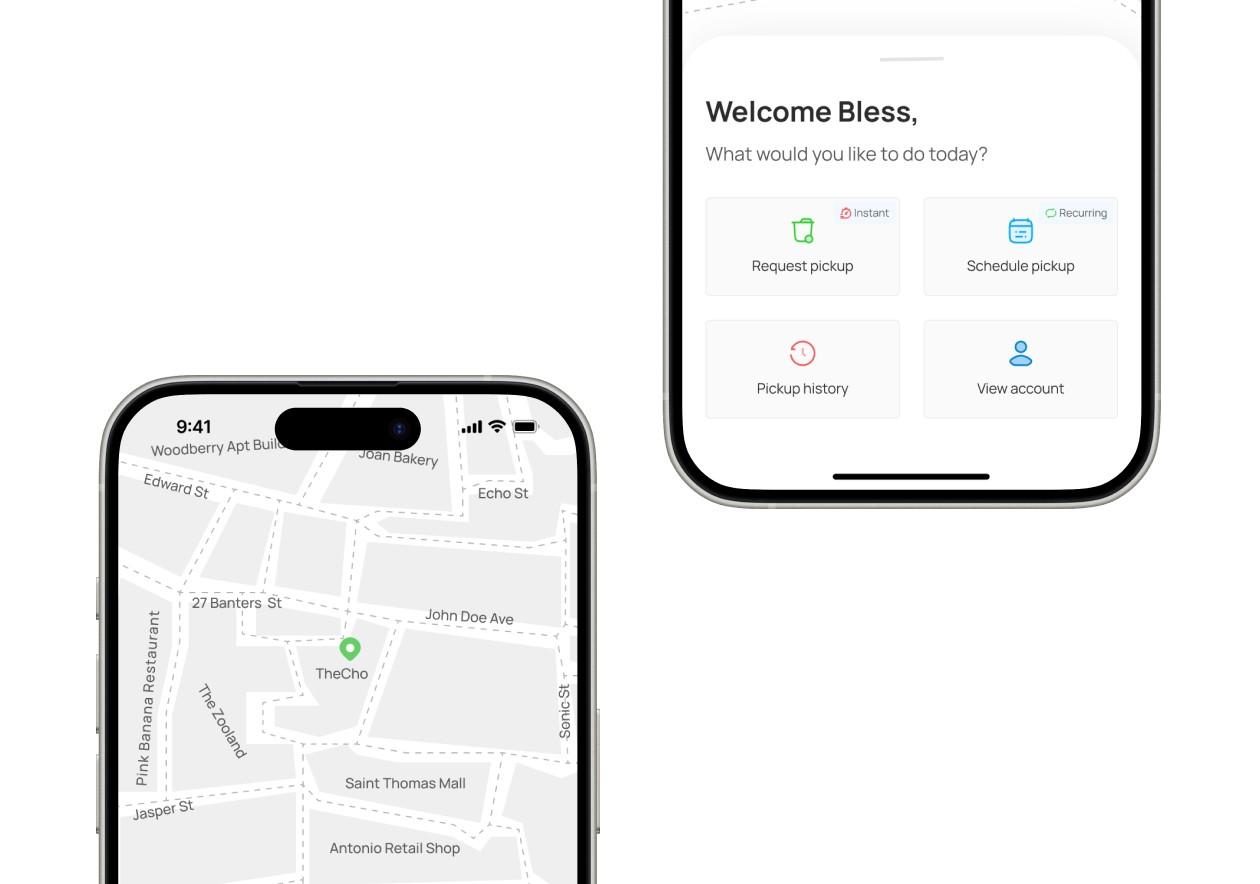
It was designed to prioritize the most important actions users need while providing context and reassurance.
The map was place at the top to show the user’s current location and, when a pickup request is made, display the distance between the user and the pickup team.
While personalization wasn’t the primary focus, this greeting creates familiarity and friendliness, reflecting Witties Ghana’s approachable brand and making the digital experience feel more human.
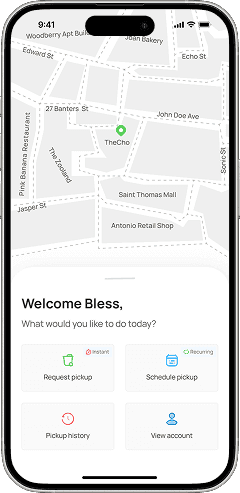
Based on user research, I separated the two main actions into distinct buttons:
- “Request pickup” (Instant): For urgent, one-time waste disposal needs that require immediate attention.
- “Schedule pickup” (Recurring): For long-term, consistent pickups that users want to set up and automate.
This separation addresses different user needs and mindsets. Some users need help right now, while others want to set up a reliable, recurring system.
Scheduling pickups
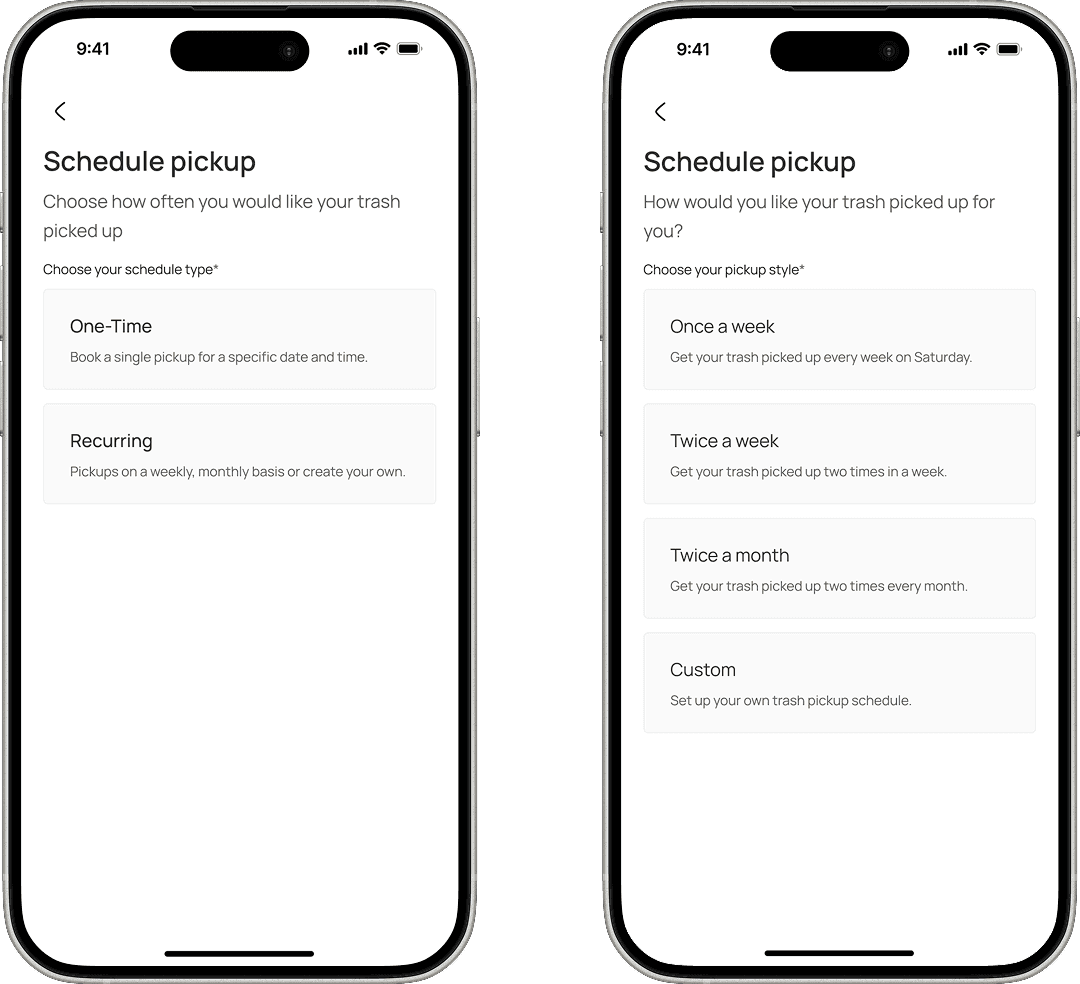
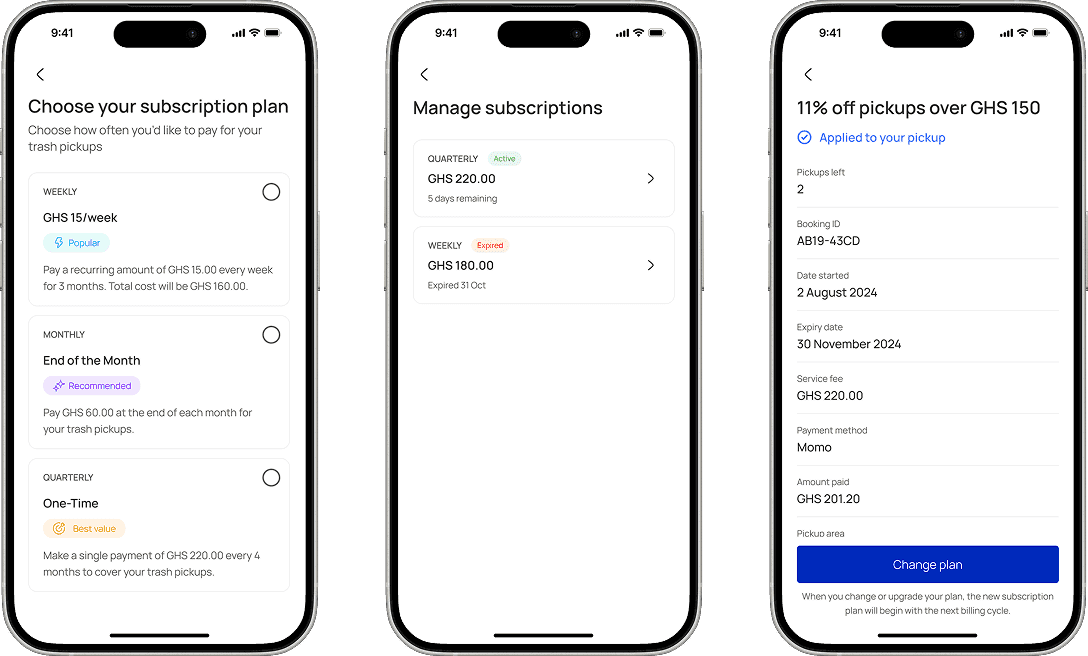
I'm particularly proud of the scheduling system, which allows users to choose between one-time pickups or recurring schedules (weekly, monthly, quarterly).
The scheduling flow followed a similar pattern to the one-time request process, but with added flexibility for users to choose pickup frequency and subscription payment models.
This addressed the need for a “set it and forget it” solution.
Choosing payment
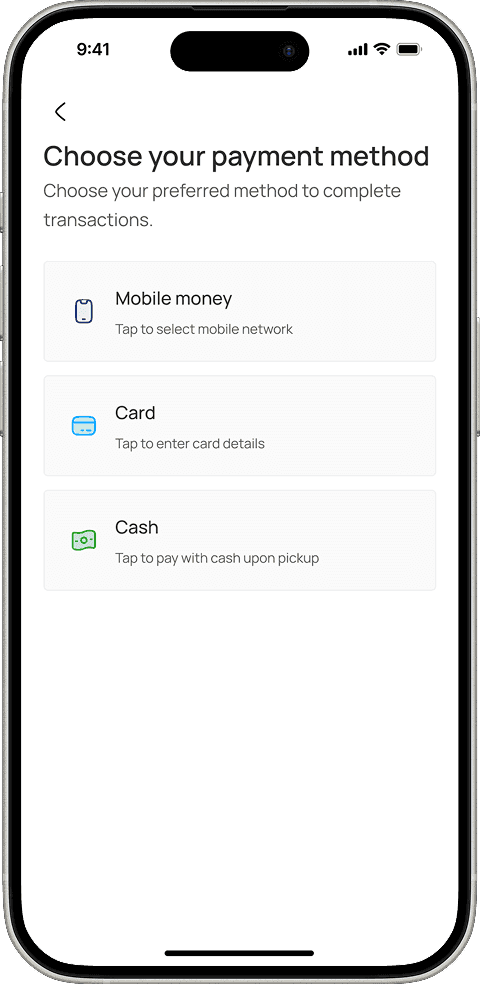
I designed multiple payment options (Mobile Money, Bank/Card, Cash) to accommodate different user preferences and comfort levels with digital payments in the Ghanaian market.
Subscriptions
A clear system for users to view ongoing, completed, and cancelled pickups, as well as manage their active subscriptions was designed for flexibility.
This transparency builds trust and gives users control over their waste management.
Some Other screens
Outcome
The design successfully solved Witties Ghana’s problem. While the app hasn’t moved to development yet because the company wants to establish common ground in the market first, the designs are being used internally for planning and stakeholder discussions.
What I Learned
This project taught me invaluable lessons about working with real clients. I learned how to communicate consistently with stakeholders, present my work, and contribute strategically to a project’s success.
Most importantly, this project taught me how to problem-solve under real constraints, balance user needs with business goals, and iterate based on feedback.
Moreover, during the prototyping phase, I realized that there were many gaps in the project, which is concerning for a product that aims to launch. However, I see this as a work in progress and proof of concept.
I had a lot of fun and learning experience working on this project and hope you enjoy going through it.